Apart from a variety of fads, skin care had little in the way of evolution for centuries. In the last decade however, the pace of innovation in skin care has increased a thousand-fold. With new breakthroughs for ingredients and wearable technology being driven by a deeper understanding of the human body and accelerated by artificial intelligence, the present and future looks bright for helping us achieve healthy skin.
How we got here
Through the ages, beauty has always been an important part of almost all modern societies, with evidence of a variety of skin care regimes recorded as far back as 3000 BC in Egypt. Over time, there have been some elaborate and rather crazy fads, that, by today’s standards would be considered borderline insane. While Cleopatra, rumoured to bath in the milk from one thousand goats to keep her skin youthful, might have actually been on to something, others like Elisabeth of Austria, who would sleep with a facemask made of raw veal were heading down snake oil territory.
In April 2003 a major breakthrough in the scientific community was about to unfold, with a profound impact across all aspects of human health. The human genome project, a remarkable, global effort to map the entire genome of the human body was complete. The then US President Bill Clinton and UK Prime Minister Tony Blair both announced on national television the successful culmination of this incredible scientific achievement. With every gene mapped out and available for anyone to download from the internet, there was a rapid acceleration of cancer treatments, anti-virals, cures for hereditary diseases and of course treatments for skin conditions at a pace never seen before in human history. This was some two decades ago, and our understanding of the human body and the interactions of the cells within it has evolved even further. This has driven some incredible breakthroughs for treating skin ailments and aided in the development of some truly exceptional ingredients and technologies for skin care.
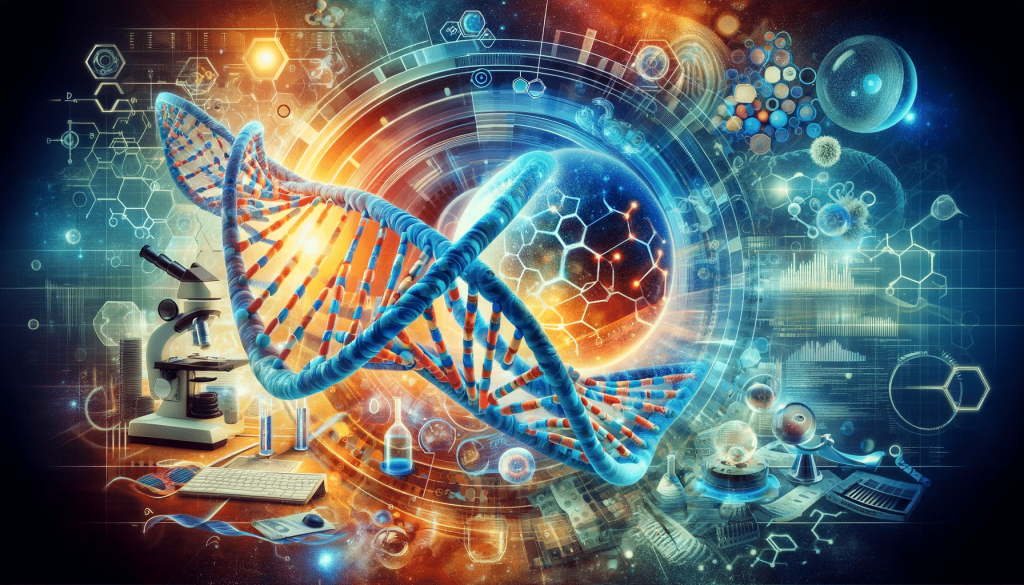
The learnings from genomics research have also helped our understanding of the intricate balance of our skin and body’s internal microbiome and how the microscopic organisms living on our skin and in our gut play an incredibly important role in the overall health of our skin, leading to the development of cosmetic products that aim to keep a healthy microbiome balance.
Over the last two decades, the emergence of new tools, techniques, advanced artificial intelligence and machine learning has significantly boosted the cosmetics industry’s capacity to bring high-quality products to market. Techniques such as high-throughput screening (HTS) allows for the rapid testing of thousands of compounds and their effects on skin cells, paving the way for new active ingredients. Nano-technology has also allowed for the development of ingredients that have more efficient delivery of these active ingredients to nourish skin and advanced digital imaging has paved the way for rapid diagnosis of skin conditions. As these technologies continue to improve and with the aid of AI, many technologies are now being made available to consumers through smartphone apps, wearable technology and other small devices.
What the future holds
I have no doubt that we are only on the cusp of discovery with skin care advancements. While the last two decades have seen more innovation and development than the preceding 6000 years of recorded cosmetic history, we’ve only just begun to unfold the secrets within our genome and the more we discover, the more we find left to discover. Much like Socrates’ declaration that he knows nothing; as our deepening understanding of the complexity of the world of skin care and as our knowledge base expands, so too does our awareness of the unknown. This fundamental principle in the philosophy of science and epistemology, highlights the ever-expanding boundary of human knowledge and understanding. Simply put, the more we know, the more we realise we don’t know (yet).
This exploration into the unknown is surely going to lead to some incredible discoveries over the coming years. In this, I have tried to predict some of the advancements we are likely to see, from the obvious through to what might considered far-fetched by current standards.
In Your Products – Ingredients
The future of cosmetic ingredients is at an exciting intersection of technology, sustainability, and personalized care. Advancements in biotechnology are expected to play a pivotal role, with a growing emphasis on eco-friendly and ethically sourced ingredients.

Synthetic biology might enable the creation of high-performance, sustainable compounds that mimic rare natural ingredients, reducing environmental impact. The exploration of the skin microbiome is likely to yield probiotic or prebiotic skincare products tailored to individual needs, enhancing skin health and resilience. Nanotechnology promises more effective delivery systems, allowing for deeper penetration of active ingredients and targeted treatment. Personalization will also be a key trend, driven by AI and genetic analysis, leading to products uniquely formulated for an individual’s skin type and concerns. Furthermore, the rising consumer awareness around health and the environment will likely steer the industry towards more transparent, clean, and ‘green’ formulations, meeting the demands for safety and sustainability. The future of cosmetic ingredients will be marked by a blend of scientific innovation, personalized approaches, and a conscientious commitment to the environment and ethical standards.
On Your Body – Wearables
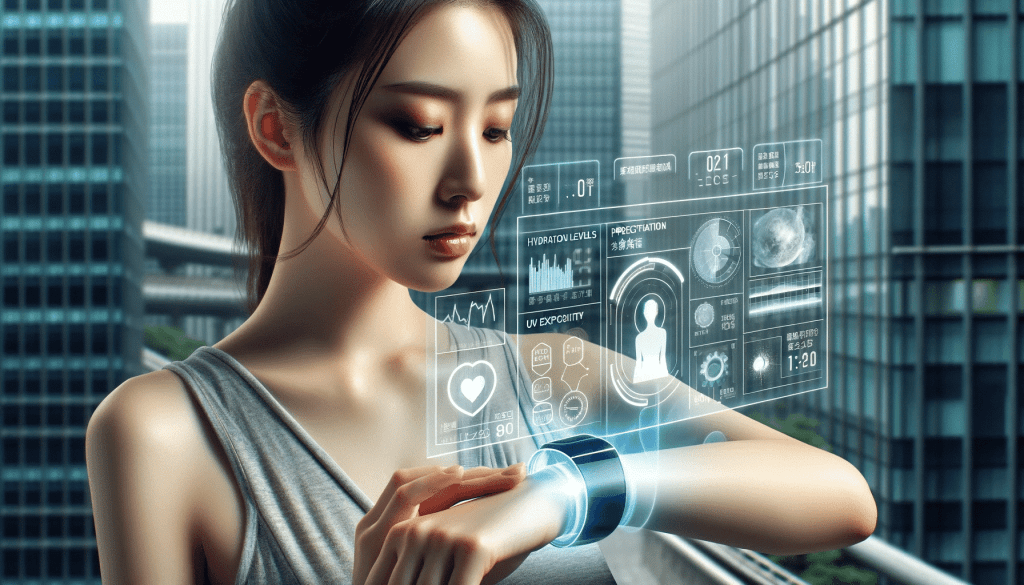
Wearables in skincare represents a fusion of cutting-edge technology and personalized skin health management. We’re likely to see sophisticated devices that not only track skin condition in real-time but also respond to its needs.
Imagine smart patches that not only monitor hydration levels, UV exposure, and environmental stressors but also release active ingredients based on the skin’s immediate requirements. Wearables will become more integrated with IoT (Internet of Things), allowing them to communicate with other smart devices and provide comprehensive insights into skin health in relation to lifestyle factors like diet, sleep, and exercise. The incorporation of AI and machine learning will enable these devices to predict skin issues before they surface and recommend pre-emptive measures. These advancements will not only revolutionize daily skincare routines but also offer groundbreaking tools in dermatological treatment and research. The convergence of technology, beauty, and health in wearable skincare devices promises a future where skincare is highly personalized, proactive, and seamlessly integrated into our daily lives.
At the Clinic – Dermatology
Dermatology treatments are poised to undergo revolutionary changes, blending cutting-edge technology with advanced medical science. I can envision the use of nanorobotics for precise, cellular-level skin treatments, addressing issues like aging, scarring, or even melanoma at their source.
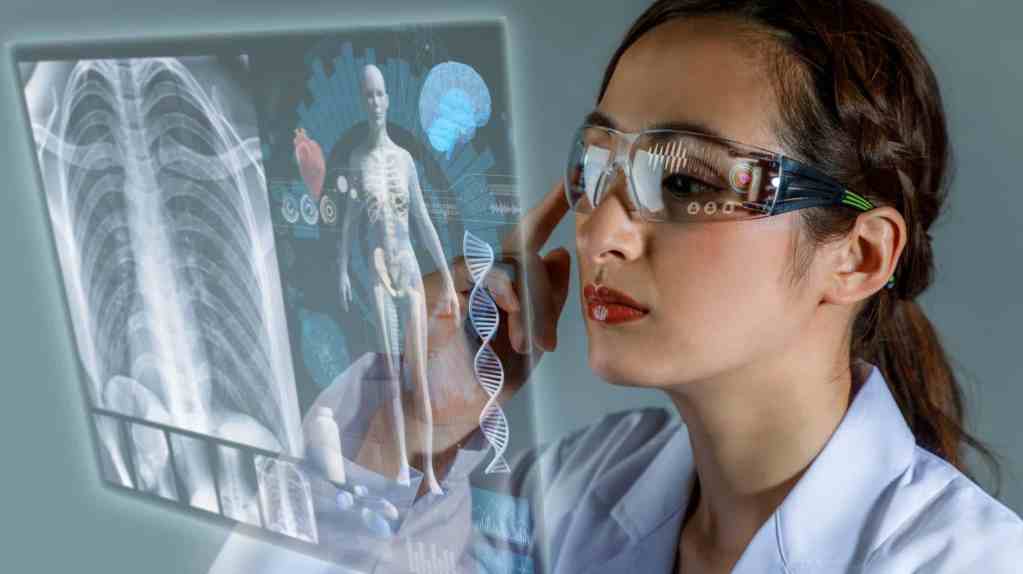
Gene editing technologies like CRISPR could be employed to alter skin cells at the DNA level, potentially eradicating genetic skin disorders or reversing signs of aging. Virtual reality may offer immersive tele-dermatology, where patients can receive consultations and even simulated treatment experiences from anywhere in the world. Artificial Intelligence, evolving beyond diagnostic support, could autonomously conduct skin surgeries and treatments with precision surpassing human capabilities. We might also see the rise of fully personalized skincare drugs and topical treatments, developed through a combination of genetic, microbiome, and lifestyle data, offering tailored solutions that are incredibly effective and side-effect-free. In this future, dermatology transcends conventional boundaries, offering not just reactive treatments but proactive, personalized skin health management, blurring the lines between health, beauty, and technology.
In the Laboratory
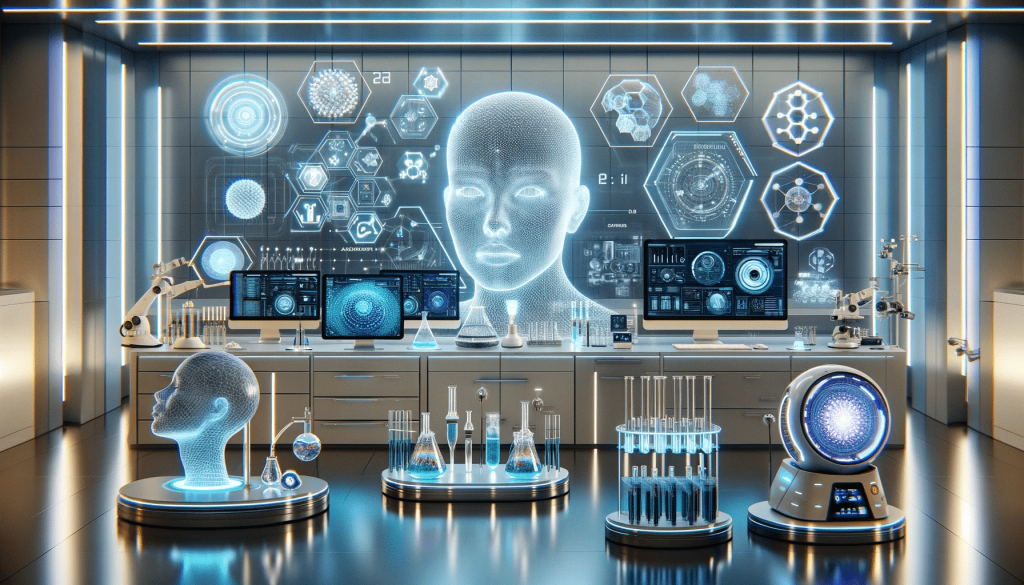
Laboratory equipment in the skincare industry is expected to leap beyond current capabilities, venturing into realms of unprecedented precision and personalization. Advanced AI-driven analytical tools will likely become the norm, capable of deciphering complex skin biochemistry and genetic predispositions at an individual level.
We may see the emergence of highly sophisticated 3D bioprinting technologies that can create fully functional skin replicas, tailored to mimic a specific person’s skin, for more accurate testing and product development. Quantum computing could revolutionize data processing in skincare research, enabling the analysis of vast datasets for ingredient synergy and skin interactions at an extraordinary speed. Nanotechnology might be employed to engineer microscopic sensors that can be embedded in the skin, continuously transmitting data on skin health, thereby facilitating real-time monitoring and adjustment of skincare regimens. Labs might also harness augmented reality (AR) for more interactive and detailed study of skin tissue and cellular behaviors. These advancements will not only refine product efficacy but also open new frontiers in personalized skincare, making it more effective, responsive, and aligned with individual health and wellness goals.
Exploration Ahead
The possibilities are truly exciting, further exploration into the known and unknown will have profound positive impacts on how we manage and treat our skin. Some of these predictions above are likely to be just around the corner, while others could still be years, even decades away. Now is quite possibly one of the most exciting times in human history to be involved in the evolution of skin care, human health and science. For now, we need to rely on good science, a healthy diet, expert advice and well researched cosmetic products for our skin.